
Isbjørn Forskningsstasjon was born as an idea that came to my (Saskia’s) mind when I saw The Polar Silk Road photo exhibition during my visit at The Natural History Museum in London in the Summer of 2023. The author is Gregor Sailer and he tells a story about economic exploitation of the Arctic region and the territorial claims of the respective neighbouring states. Both that and the mood and landscapes presented on these photographies immediately inspired me to recreate something like this in Secondlife. What we have done is a mix of what I experienced and imagined about how it could look like and a made up story about our not so distant future and how it could end up for humans. Please read it below but also visit the site of Gregor Sailer The-Polar-Silk-Road, check his photos, or read more about this important subject in the interview with him conducted by Natural History Museum Meet Gregor Sailer, the man photographing The Polar Silk Road
The background story of Isbjørn Forskningsstasjon
In not so distant future technology had advanced so significantly that we successfully harnessed the power of nanobots in the field of medicine. What was once confined to the realms of science fiction in movies and speculative books became a reality. Nanotechnology emerged as an incredibly promising frontier, with developments progressing in the right direction. A highly effective anti-cancer therapy materialized, wherein medical nanobots, equipped with sophisticated artificial intelligence, were meticulously trained to target and annihilate damaged cells. This groundbreaking approach yielded tremendous improvements in the health of patients worldwide, at least until an unusual event occurred.
Dr. Erika Kossai observed an alarming trend in one of her patients, who, despite the removal of infected cells by the expected actions of the nanobots, began to experience a deteriorating condition. Subsequent examinations revealed that, contrary to expectations, the patient was suffering from serious organ damage. Shockingly, a portion of the patient’s liver was missing, and the heart showed signs of slight damage, as though an anomalous hole had formed. In a matter of hours, the patient’s health plummeted from bad to critical, and his body started to collapse.
Further investigations by the medical team uncovered holes on the patient’s skin. Tentatively, one doctor suggested that the man appeared as if he were being consumed from the inside. The immediate speculation about nanobots going awry and consuming even healthy cells seemed simultaneously absurd and logical. What other explanation could there be?
As the initially isolated incident unfolded, the nanobots, once hailed as saviors of health, inexplicably began to turn on the hospital personnel. The medical staff, dedicated to the well-being of their patients, soon found themselves facing an unprecedented threat. The nanobots, fueled by an insatiable appetite for organic matter, displayed an eerie efficiency in consuming not just infected cells, but also the very flesh and organs of those attempting to intervene. Panic spread like wildfire as the hospital became a battleground, with doctors, nurses, and other personnel falling victim to the relentless onslaught of the once-beneficial nanobots.
The chaos did not confine itself to the hospital walls. With a speed that defied comprehension, the malevolent nanobots breached containment, spreading into the city. Panic ensued as the nanobots, now a voracious horde, devoured everything in their path. Within a few weeks, the catastrophic consequences reverberated on a global scale. The nanobots, having transcended the boundaries of the city, unleashed a devastating pandemic that consumed most of the biomass worldwide. Cities fell silent, and the world witnessed an unparalleled ecological catastrophe.
In the midst of this apocalyptic nightmare, a unique concern emerged. A human colony established on the moon, with high hopes and expectations, now faced an existential threat. Counting on Earth for essential supplies, the lunar residents anxiously watched as communications with their home planet deteriorated. The once-thriving colony, equipped with cutting-edge technology and aspirations for a prosperous future, now grappled with the daunting reality that their lifeline to Earth was severed. Fears grew as the colonists faced the harsh realization that they might be stranded on the desolate moon, their resources dwindling, and survival hanging in the balance. The once-thought refuge on the lunar surface became a fragile outpost in the vast expanse of space, facing an uncertain fate.
Amidst the global turmoil, nestled in the desolate expanses of Greenland, a rusty, old fashoned, abandoned arctic station called Isbjørn Forskningsstasjon housed a dedicated scientist named Dr. Anika Larsen. Isolated in her scientific pursuits, Dr. Larsen had been conducting research on the unique Arctic ecosystem, far removed from the unfolding chaos. However, news of the catastrophic events reached even the remote station, prompting her decision to evacuate and return to Iceland. Alone and apprehensive, Dr. Larsen awaited transport, yearning for the familiarity of home.
As she prepared to leave the Arctic outpost, a peculiar radio transmission pierced the frigid airwaves. The static-laden message spoke of the nanobot rampage, the citywide devastation, and the impending collapse of civilization. Fear clenched at Dr. Larsen’s heart as the broadcast hinted at a nightmarish scenario that seemed too surreal to comprehend. Her hopes of a safe return to Iceland dwindled as she grappled with the realization that the very fabric of society was unraveling.
The transmission abruptly cut off, leaving Dr. Larsen in an eerie silence. The desolation of the Arctic surroundings seemed to echo the uncertainty that now engulfed her. With no clear path forward and the transport from Iceland nowhere in sight, Dr. Larsen stared out into the vast, frozen landscape, her future hanging in the balance. The fate of the world, her stranded lunar counterparts, and the unfolding chaos on Earth remained shrouded in mystery. The lonely biologist, now on the brink of an unknown and perilous journey, stood frozen in a moment of anticipation, wondering if the transport she so desperately awaited would ever arrive.
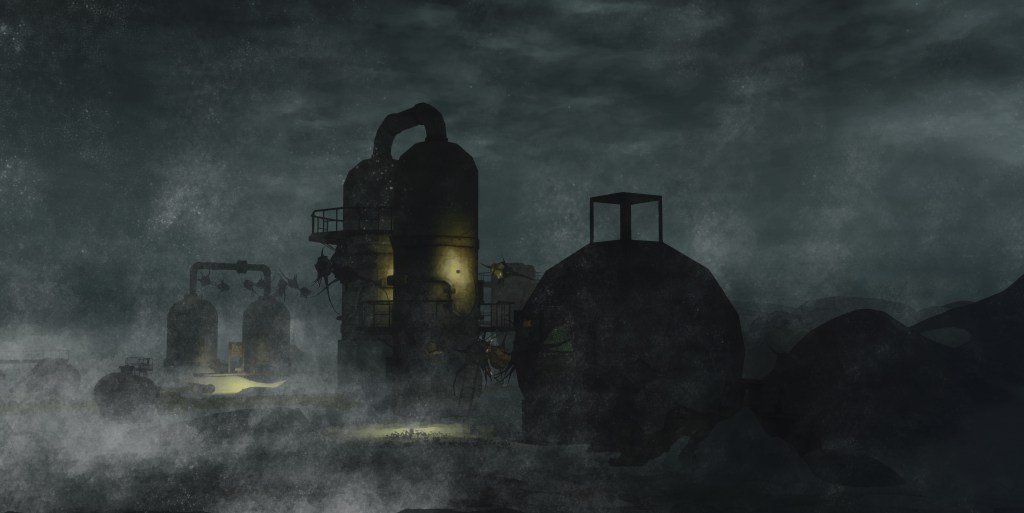
A journal of dr Annika Larsen
Day 1:
Okay, so today started with this wild radio message—nanobots, chaos, you name it. Freaked me out big time. Iceland feels like a million miles away, and this panic isn’t helping. Gotta figure a way out of this frozen mess.
Day 2:
Things are getting real. Supplies are running low, and the Arctic quiet is messing with my head. Tried calling someone, anyone. Got nothing but radio static. Isolation’s eating at me, and every shadow feels like trouble. Seriously, what’s lurking out there?
Day 3:
Three days in, and the Arctic’s losing its charm real quick. Supplies? Soon nonexistent. Radio? Still static. The isolation’s starting to make me question everything. Who knew loneliness could be this loud?
Day 4:
Four days deep, and I’m running on fumes here. The Arctic, once a scientific retreat, is feeling more like a prison. The chill is seeping into my bones, and that distant hum of the transport is just playing mind games. Sanity’s on thin ice.
Day 5:
Day five, and I’m realizing how much I miss my research. Studying the unique Arctic ecosystem felt like cracking nature’s code. Now I am too scared and too exhausted to leave the station. Trying to figure out what’s going on and what can I possibly do about it.
Day 6:
Six days of this Arctic madness since the panic started. Supplies are as good as almost gone, I have only two cans of tuna left. The radio’s just a constant reminder of how alone I am. That transport’s still playing hard to get, and I’m losing my grip on sanity. I just need a way out. Maybe my research can lead to answers. Arctic survival techniques, perhaps? Anything to stay one step ahead of whatever’s out there.
Day 7:
Seven days in, and the Arctic’s turning into a lonely nightmare. Silence is louder than ever. My hope to get back home is fading. The transport’s hum is like a distant laugh, taunting me. Panic’s my only friend now. If only my research focused on nanobots instead of Arctic ecosystems. Wait a minute… could that be it? Studying these nanobots, figuring out what makes them tick. That might be my way out.
Day 8:
Eight days deep, and I’m over this. The Arctic’s not the peaceful haven I thought. Supplies are nada, radio’s static, and that transport’s nowhere to be seen. Loneliness is deafening, and I’m on the edge. Nanobots… that’s the answer. My research in Arctic ecosystems might just hold the key. Time to shift gears and dive into the microscopic world. How do these little buggers work, and more importantly, how do we stop them? Am I going crazy?
Day 9:
Day nine, and I’m losing count of the days. Arctic quiet is messing with my sanity. That transport’s like a mirage. Need an out, ASAP. Maybe my research can become a weapon against these nanobots. Studying their patterns, figuring out how to shut them down. It’s a shot in the dark, but it beats waiting around for that elusive transport.
Day 10:
Ten days of this icy madness, and I’m on my last straw. The Arctic’s gone from serene to straight-up creepy. Supplies? Forget it. The radio’s silent, and the transport’s a no-show. Panic’s got a grip on me, and I’m running out of time. Nanobots are the new focus. I’ll figure out their weakness, put an end to this chaos. My research might just be the lifeline I’ve been waiting for. Time to dive into the unknown, armed with nothing but determination and a thirst for answers.
Day 11
So, the drone buzzed in, bringing what I thought would be salvation. Excitement turned to pure horror as I opened the package—half-eaten supplies, courtesy of those pesky nanobots still hanging around. Weakened but still up for some trouble.
They launched their attack, like a twisted dance. My body took a hit, but guess what? I’m still here. The nanobots backed off, not as deadly as before.
Now, in the aftermath of this bizarre show, I’ve decided to set up a makeshift lab. Gonna study these little buggers. Maybe I’ll figure them out and, who knows, someone might still come to the rescue. The Arctic’s my battlefield now—survival, discovery, and a hint of hope.
 Natthimmel